Double Runner — Piegan
Plate 191 · Portfolio 6 · 1911
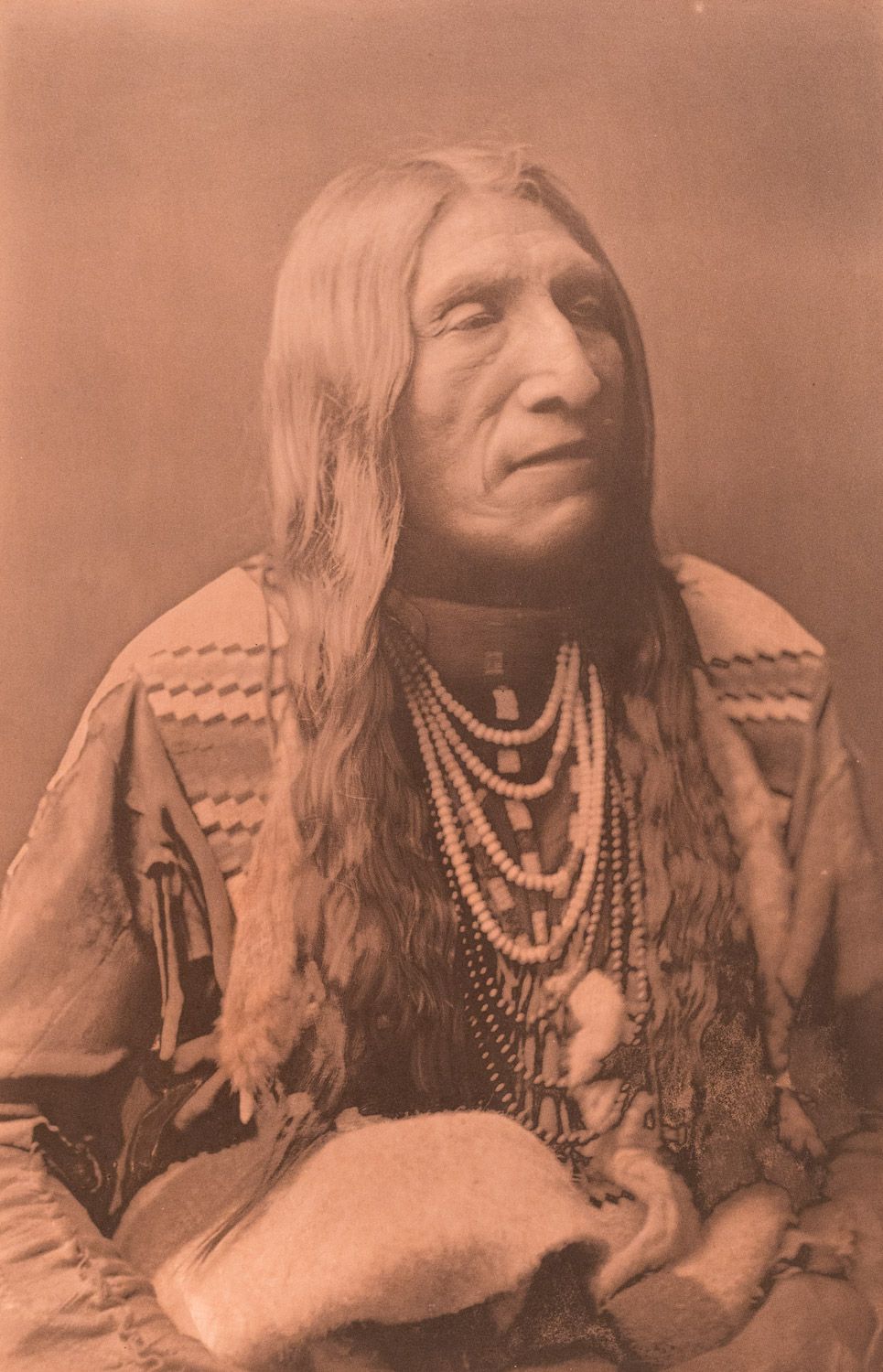
“In disposition the Piegan are particularly tractable and likable. One can scarcely find a tribe so satisfactory to work among.”
— Edward S. Curtis, The North American Indian, Portfolio 6Double Runner (Ahjutomahka) · Piegan · Blackfoot Confederacy
Double Runner — whose Piikáni name was Ahjutomahka — was a member of the Piegan nation, one of the three sovereign nations of the Blackfoot Confederacy, based in the plains of Montana.
Curtis encountered and photographed Double Runner in 1900, during his first formal photographic field study in Montana. The portrait captured Double Runner in highly ornate deerskin clothing, layered with intricate jewelry and long wavy hair — attire that, Curtis recorded, designated him as a figure of high status and leadership within the Piegan nation.
Curtis was struck enough to document Double Runner by name in his field logs, noting that he possessed “an excellent type of the Piegan physiognomy, as well as the ideal North American Indian as pictured by the average person.” It is a rare distinction — Curtis photographed hundreds of subjects; he named far fewer.
The Piegan were among the last Algonquian peoples to migrate to the western prairies. Their warrior societies — the Doves, Braves, All Brave Dogs, Raven Bearers, and Bulls, collectively the “All Comrades” — governed conduct in camp and on the hunt. Double Runner’s presentation suggests standing among them.
How the Camp Keeper prices these plates →
With $1,750 contributed in your name to a Native American cause of your choosing.
Talk to the Camp KeeperThe Camp Keeper's plate ownership exceeds what is being currently offered. See more plates from the collection →